Heitor Carvalho: “Villages Can Be the Places Where We Learn to Live in Community Again”
With Aldeias do Futuro (Villages of the Future), his first feature-length documentary, Portuguese filmmaker Heitor Carvalho portrays a rural Portugal undergoing profound transformation. We spoke with a director who sees villages as laboratories for the future, where social ties, cooperation, and our relationship with the land are being reinvented.
Can you tell us about your journey? Where do you come from, and how did you come to make this film?
My name is Heitor. I was born in Lisbon, although my family roots are in the rural north of Portugal. My grandparents came from a rural area, and my parents moved to Lisbon, where I grew up. For many years, I travelled extensively and lived within international communities. Ironically, it was that experience that made me feel, in a way, like a foreigner in my own country.

I then felt the need to reconnect with the Portuguese language, culture, music, traditions, and, above all, with ways of life that are more closely connected to nature and community. I spent several years involved with the EcoVillage Network, visiting regenerative projects and intentional communities. These experiences were deeply meaningful, but they also revealed an important limitation: many of these communities end up creating bubbles, without building a genuine relationship with the territories in which they are established.
At Tamera, for example, I was struck by the fact that many people had been living there for decades without speaking Portuguese. It made me question how we can talk about regeneration if there is no deep connection with the local people, culture, and history.
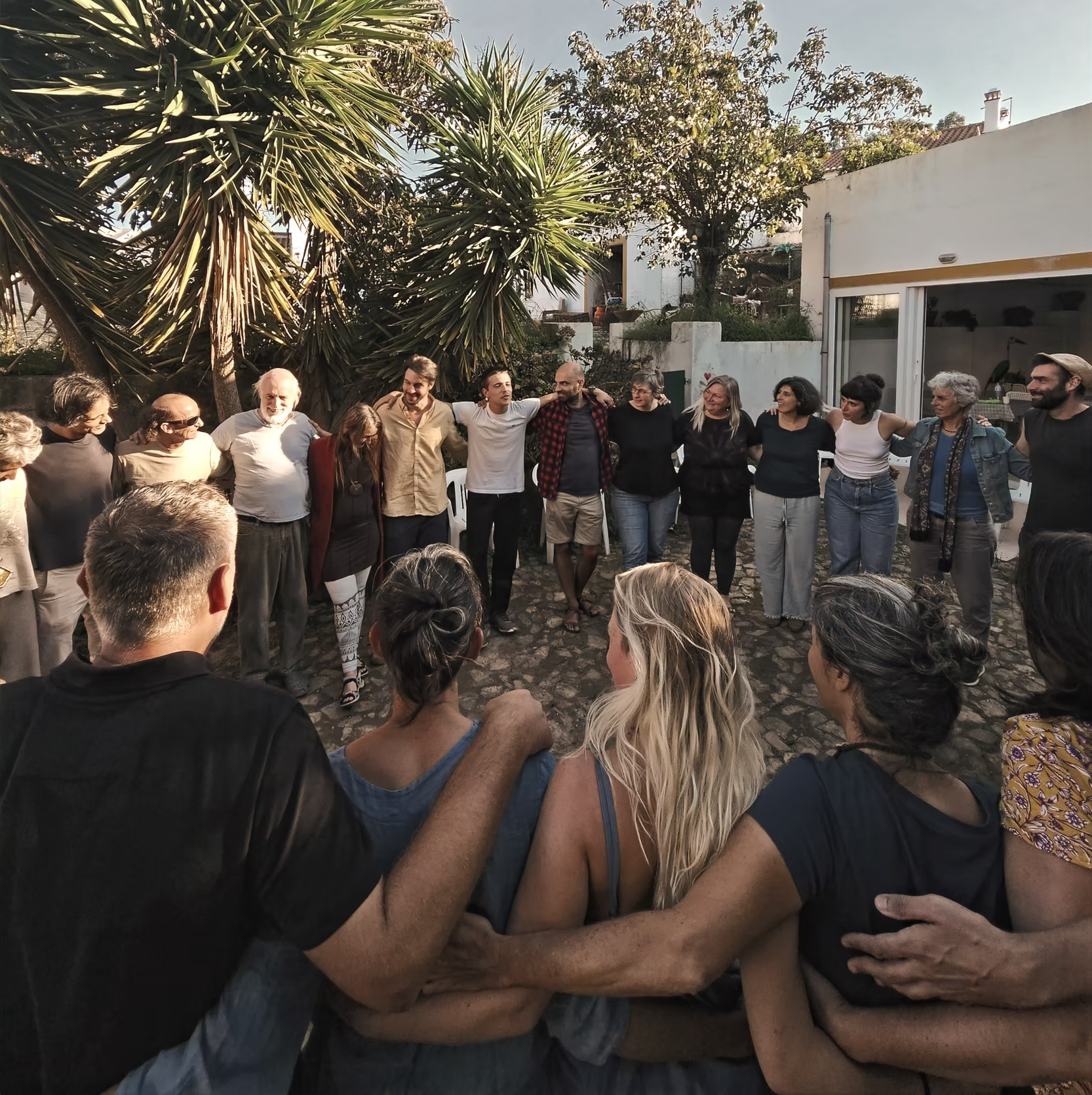
It was through this search that I arrived in São Luís. I discovered a vibrant village and met the Co.Re Learning Centre through José and Rafa. At first, the idea was simply to produce a short video introducing their project to potential partners. But we quickly realized that a much larger movement was taking place across Portugal: people returning to the countryside, revitalizing villages, and imagining new ways of living together.
From that process emerged the documentary Villages of the Future (Aldeias do Futuro), as well as the concept of Re.Rural, which aims to give visibility to this growing movement of territorial regeneration across Portugal.

What is your focus now?
At the moment, I’m continuing to tour the documentary across the country. We’ve been organizing community screenings hosted by local communities themselves, using the film as a starting point for conversations about the challenges and future of their territories.
From September onwards, we plan to present the film at film festivals and later bring it into schools and universities. Our goal is for the documentary to spark conversations around housing, belonging, identity, community, gentrification, and the regeneration of rural territories.
At the same time, we’re developing baldio.eu, a living map of regenerative projects and initiatives across Portugal, designed to strengthen connections between people, villages, and organizations working towards this transformation.
The next step is to secure funding and build a team that will allow us to continue documenting this movement. I would love for this work to evolve into a documentary mini-series, following the many inspiring stories that continue to emerge throughout the country.
Do you live in a village? What are the main challenges?
I spent the last nine months immersed in the village of São Luís, and it was a transformative experience. It is an incredibly vibrant, creative place with enormous potential, standing in sharp contrast to many other Portuguese villages that have been affected by depopulation and decline.
The biggest challenge remains the lack of opportunities for young people. Many end up leaving because they cannot find work or see a future for themselves. When that happens, these territories become vulnerable to large-scale economic interests, such as monoculture projects or other investments that exploit local resources without giving meaningful benefits back to the communities.
We need to create jobs, strengthen collaborative local economies, cooperatives, and mutual support networks that enable people to remain in their territories and build their lives there.
How do you think villages can provide answers to the transition our society needs?
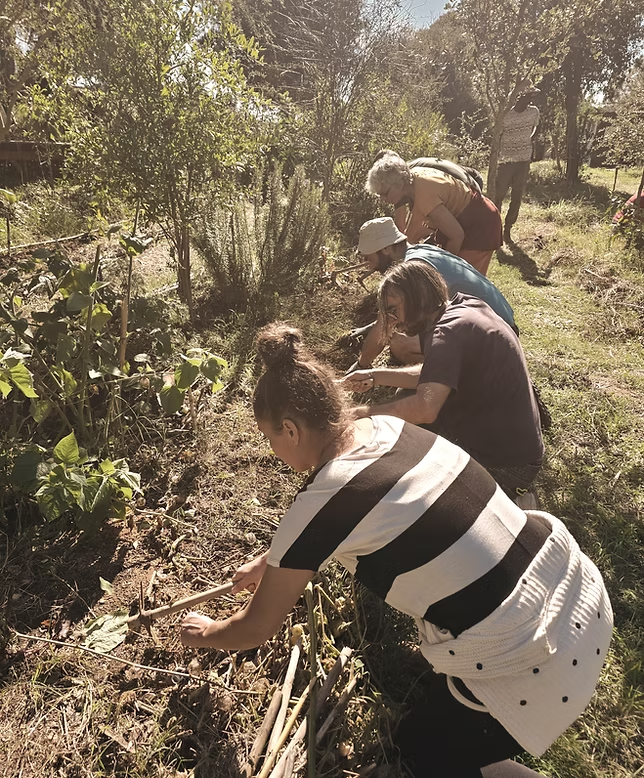
I believe villages are among the most fertile places for this transition. They hold history, memory, natural resources, food production, neighbourly relationships, and a strong sense of belonging. They are places where it is still possible to rebuild human connections and develop more cooperative ways of living.
However, it’s important to distinguish between a village and an ecovillage. Many ecovillages are intentional communities created by newcomers who, at times, end up living in bubbles with limited connection to the surrounding territory. A real village already has an identity built over generations, with people who know the land, the traditions, the agricultural cycles, and the local culture.
What I am proposing is not the creation of more bubbles, but the strengthening of neighbourhoods. We need to care for the commons, revive the community spirit, and value what already exists while making room for innovation and new forms of organization.
Regeneration only makes sense if it respects the history, culture, and people who already inhabit these places. The future of villages is not about replacing what exists, but about building bridges between tradition and innovation, between those who have always lived in the territory and those who arrive with the desire to contribute. That is the kind of collaboration I believe in, and it is the conversation that this documentary seeks to inspire.