Re.Rural and Co.Re: How Rural Communities Are Regenerating Portugal’s Villages
Portugal has become one of Europe’s most inspiring hubs for ecological transition and regenerative living. While ecovillages continue to attract people seeking sustainable lifestyles, another movement is quietly transforming the country’s rural landscapes.
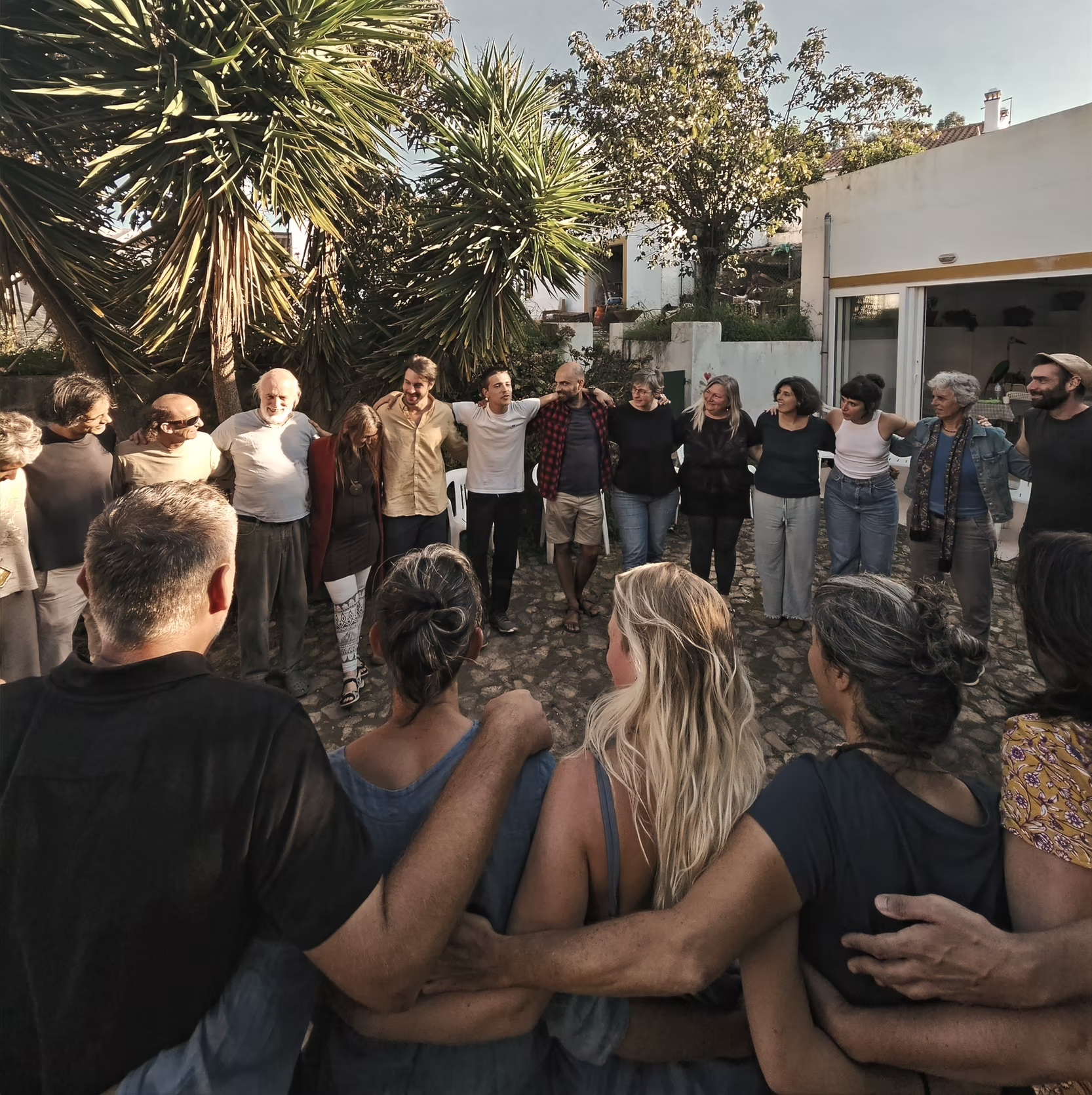
Through the initiatives Re.Rural and Co.Re, local residents, newcomers, municipalities, associations, and entrepreneurs are working together to revitalize existing villages rather than creating new communities from scratch. Their shared vision is simple yet powerful: the future of rural areas lies in strengthening the places that already exist, building on local culture, cooperation, and community resilience.
Beyond Ecovillages: Revitalizing Existing Rural Communities
For decades, ecovillages have demonstrated that alternative ways of living are possible through ecological design, participatory governance, and strong social connections.
But an important question has emerged: How can the principles of ecovillages inspire the regeneration of existing towns and villages?
This is where Re.Rural comes in.
Instead of developing isolated intentional communities, Re.Rural supports the regeneration of existing rural villages by working alongside the people who already live there.
The initiative recognizes that rural communities already possess valuable assets: local knowledge, cultural heritage, traditional skills, natural landscapes, historic buildings, and strong social networks. Rather than replacing these resources, Re.Rural helps communities build upon them to create a resilient future.
The result is a collaborative process where long-term residents and newcomers work together to imagine the next chapter of their village.
Re.Rural: Supporting Rural Regeneration in Portugal
Re.Rural acts as a catalyst for local initiatives and community-led development.
Its mission is to connect residents, local governments, organizations, entrepreneurs, and changemakers around shared projects that address today’s rural challenges.
These include:
- affordable housing;
- regenerative agriculture;
- local entrepreneurship;
- welcoming new residents;
- community services;
- sustainable mobility;
- food resilience;
- environmental stewardship.
Rather than applying one-size-fits-all solutions, Re.Rural embraces the uniqueness of every village. Each community has its own history, identity, and aspirations, making locally rooted solutions essential for long-term resilience.
Co.Re: Building Stronger and More Resilient Communities
While Re.Rural focuses on territorial regeneration, Co.Re places human relationships at the center of the transition.
Its approach is based on a simple insight: resilient communities are built through trust, collaboration, and shared responsibility.
Co.Re develops methodologies that help communities strengthen participatory governance, improve collaboration, and cultivate the social skills needed for collective action.
Instead of viewing sustainability solely through environmental or economic lenses, Co.Re recognizes that healthy relationships are fundamental to resilient ecosystems and thriving communities.
When people learn to cooperate, share resources, and care for the commons, villages become better equipped to face social, economic, and climate-related challenges.
A Regenerative Vision for Rural Development
Although their activities differ, Re.Rural and Co.Re share the same philosophy.
They see rural regeneration as more than infrastructure projects or economic investment. True regeneration also involves restoring social fabric, strengthening local identity, encouraging citizen participation, and creating meaningful collaboration across generations and backgrounds.
This regenerative approach supports initiatives such as:
- restoring historic buildings;
- supporting local farmers and businesses;
- creating affordable housing solutions;
- developing community spaces;
- protecting biodiversity;
- strengthening local economies;
- encouraging participatory governance;
- managing shared resources as commons.
Together, these actions contribute to healthier, more resilient rural ecosystems.
Portugal as a Living Laboratory for Regenerative Communities
Portugal has become an international destination for people interested in ecovillages, regenerative agriculture, and community living.
Increasingly, however, the most innovative projects are not focused solely on building new intentional communities. They are exploring how newcomers and long-term residents can collaborate to regenerate existing villages together.
This shift represents an important evolution within the broader regenerative movement.
Rather than creating parallel communities, initiatives like Re.Rural and Co.Re demonstrate how ecovillage principles—including cooperation, shared stewardship, ecological responsibility, and participatory decision-making—can strengthen entire rural territories.
Inspiring the Future of Rural Living
As communities around the world search for responses to climate change, biodiversity loss, and rural depopulation, Portugal offers valuable lessons.
Re.Rural and Co.Re show that the future of rural areas depends not only on investment or public policy but also on the ability of people to reconnect with one another, care for their landscapes, and co-create resilient local economies.
For ecovillages, community builders, and rural innovators everywhere, these initiatives offer an inspiring example of what regenerative development can look like when it begins with the people and places that already exist.
The future of sustainable living may not always require building new communities. Sometimes, it begins by helping existing villages flourish once again.